

Proudly made in the USA | Available through participating VA Medical Centers
Proudly made in the USA
Available through participating VA Medical Centers
Drug-Free Pain Relief for Veterans Living with Functional Abdominal Pain
Drug-Free Pain Relief for Veterans Living with Functional Abdominal Pain
IB-Stim® is the first FDA-cleared, drug-free neuromodulation technology for treating functional abdominal pain associated with functional dyspepsia and irritable bowel syndrome.
IB-Stim® is the first FDA-cleared, drug-free neuromodulation technology for treating functional abdominal pain associated with functional dyspepsia and irritable bowel syndrome.
Proudly made in the USA | Available through participating VA Medical Centers
Drug-Free Pain Relief for Veterans Living with Functional Abdominal Pain
IB-Stim® is the first FDA-cleared, drug-free neuromodulation technology for treating functional abdominal pain associated with functional dyspepsia and irritable bowel syndrome.
It’s Not All in Your Head.
It’s Not All in Your Head.
The Gut-Brain Connection Behind Functional Abdominal Pain
The Gut-Brain Connection Behind Functional Abdominal Pain


*Studies & IFU available at www.ibstim.com/ifu
How Neuromodulation with IB-Stim Works
How Neuromodulation with IB-Stim Works
Drug-free pain relief, available through participating VA Medical Centers.
Drug-free pain relief, available through participating VA Medical Centers
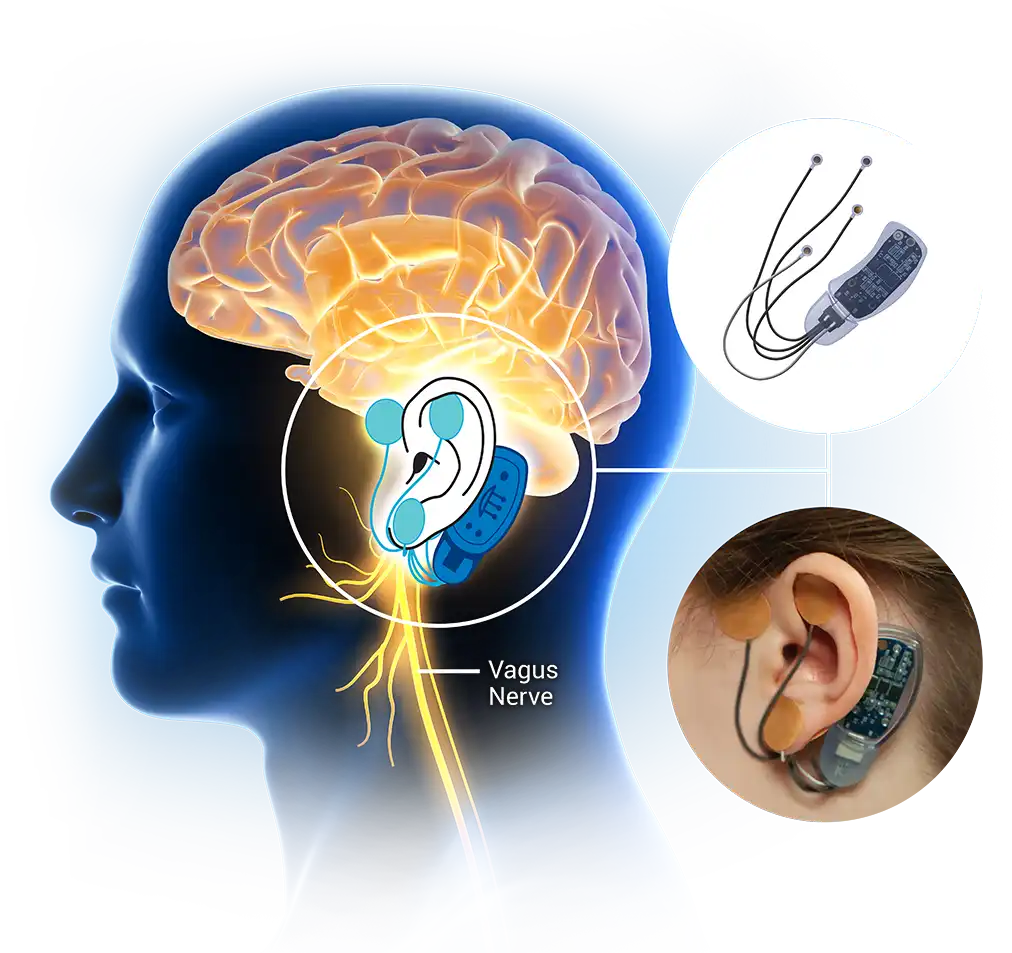
IB-Stim is a Percutaneous Electrical Nerve Field Stimulator (PENFS) that sends gentle electrical impulses into cranial nerve bundles located in the ear, including the vagus nerve. This stimulation targets brain areas that process pain and helps reduce functional abdominal pain in functional dyspepsia and related nausea symptoms
IB-Stim is a five-day (120 hours per week) treatment, one device per week for four consecutive weeks.




How does IB-Stim work?
How does IB-Stim work?
Please watch our informative video for an overview of the IB-Stim process.
Please watch our informative video for an overview of the IB-Stim process.
Frequently asked questions about IB-Stim®
Frequently asked questions about IB-Stim®
Important Information
Important Information
For important IB-Stim information, including indications, precautions, IFU, and contraindications, visit: https://ibstim.com/important-information/
For important IB-Stim information, including indications, precautions, IFU, and contraindications, visit: https://ibstim.com/important-information/
References
- Mayer EA, Tillisch K. The brain-gut axis in abdominal pain syndromes. Annu Rev Med. 2011;62:381-396. doi:10.1146/annurev-med-012309-103958 (new source; needs MLR)
- Drossman DA, Hasler WL. Rome IV-Functional GI Disorders: Disorders of Gut-Brain Interaction. 2016;150(6):1257-1261. doi:10.1053/j.gastro.2016.03.035
- Stanghellini V, et al. Gastroduodenal Disorders. 2016;150(6):1380-1392. doi:10.1053/j.gastro.2016.02.011
- Mearin F, et al. Bowel Disorders. 2016;150(6):1393-1407. doi:10.1053/j.gastro.2016.02.031
- Babygirija R, et. al. Percutaneous electrical nerve field stimulation modulates central pain pathways and attenuates post-inflammatory visceral and somatic hyperalgesia in rats. Neuroscience. 2017 Jul 25;356:11-21. doi: 10.1016/j.neuroscience.2017.05.012.
- Kovacic K, et al. Lancet Gastroenterol Hepatol. 2017;2(10):727-737
